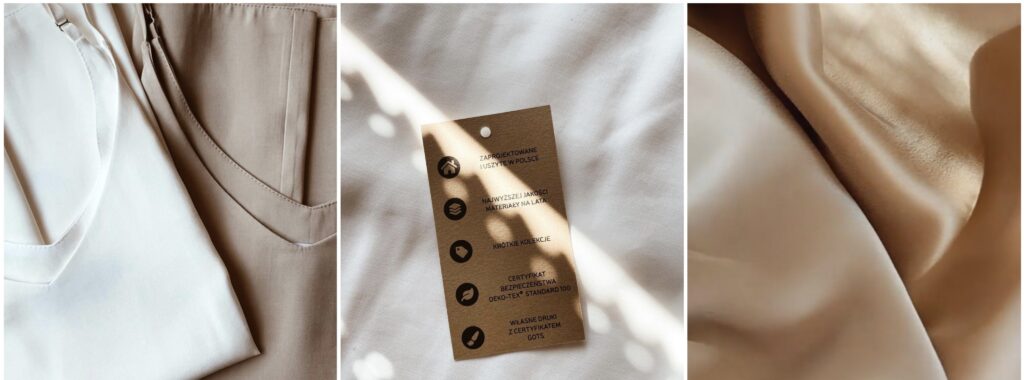

Materials and their types
For this reason, to make it easier for you to check labels, we invite you to read the post about the advantages and disadvantages of the most common materials.
---Division of materials into natural, artificial and synthetic
However, it's worth starting with a key issue: the division of materials into natural, artificial, and synthetic. Each has its advantages and disadvantages, but more on that in a moment.
Natural materials, as the name suggests, are derived from natural raw materials. They can be of plant origin (e.g., linen or cotton) or animal origin (e.g., silk or wool).
Artificial materials are often confused with synthetic ones, and although both are created through a chemical process, the difference between them is quite significant. Artificial materials are produced in a laboratory, but from substances of natural origin, primarily wood cellulose.
The final group of materials are synthetic materials, whose production is based on synthetic polymers. They are created from start to finish through chemical processes from substances that do not occur in nature.
---Materials – advantages and disadvantages
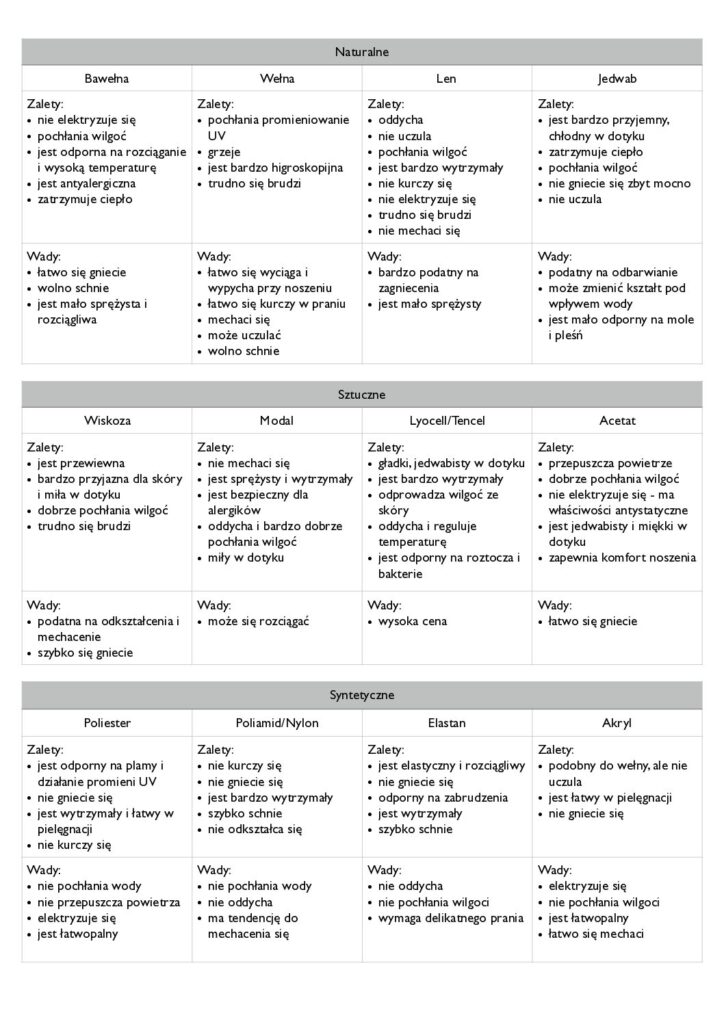
To make informed decisions when buying clothes, it's worth knowing the pros and cons of the most common materials. The table below from the e-book "Capsule Wardrobe: How to Shop Smarter" provides all this information in a nutshell.
For more, please visit our Instagram and other posts on our blog .